Showing posts with label research. Show all posts

Tuesday, April 11, 2023

Research success: Marie Curie Doctoral Network (BullNet)


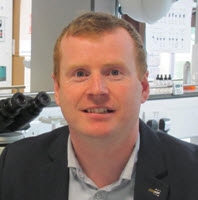
Prof. Sean Fair (picture), has recently coordinated a successful Marie Curie Doctoral Network (BullNet) which will train 12 PhD students in the area of bull fertility. The objective of Doctoral Networks is to implement doctoral programmes by partnerships of organisations from different sectors across Europe to train highly skilled doctoral candidates, stimulate their creativity, enhance their innovation capacities and boost their employability. BullNet, consisting of 8 beneficiaries and 13 associated partner organisations across 7 countries, is a multi-disciplinary and inter-sectorial research programme designed to unravel the complex underlying biology of compromised fertility of individual bulls. Cutting-edge basic, applied and machine-learning approaches will be used to deliver a robust, flexible semen product from young, appropriately reared and managed, first-season elite sires that can be used successfully for artificial insemination (AI) with predictable and consistent fertility, so as to provide the industry with key tools to meet current emissions and animal welfare demands. BullNet will also lead to the advancement of knowledge in how bull management strategies and semen processing affect the functional and molecular characteristics of sperm, thus opening scientific horizons for new applications in the area of assisted reproduction. BullNet will expose PhD students to different sectors and they will acquire a comprehensive set of transferable skills working in the specific research area relating to their individual research projects, with an emphasis on the need for technology transfer from academic institutions to commercial users.

With a 9% success rate in the most recent Doctoral Network call we congratulate Sean on coordinating this prestigious grant and wish him and his consortium well.


Recent related publications

The transcriptomic response of bovine uterine tissue is altered in response to sperm from high and low fertility bulls
Comparison of the uterine inflammatory response to frozen-thawed sperm from high and low fertility bulls

Wednesday, July 15, 2020

‘For the longest time, if a drug worked in men it was good enough for women!’

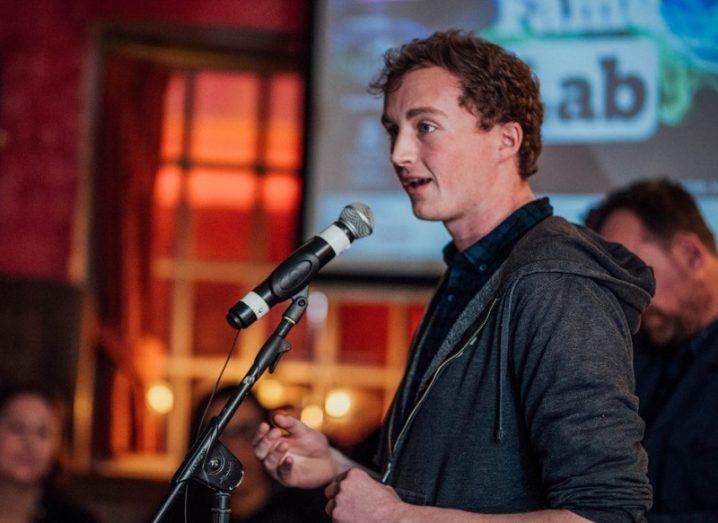
UL PhD researcher Andrew McGovern. Image: FameLab


PhD researcher Andrew McGovern of UL is looking at how women and men are different in the eyes of disease.

Andrew's interview is here.

What inspired you to become a researcher?
I was the child who asked why this happens or how that works. The child that burned the ears of their teachers with questions; I never really grew out of that. Growing up I was never grasping onto my curiosity, it was simply who I am.
Alongside this, I grew up with an autistic sister, Aíne. Trust me when I say my poor mother had an impossible task trying to answer my questions about why Aíne wasn’t coming to primary school with me, or why she’d burst into a room where my friends and I were relaxing and fling dragons at us.
A childhood like this, alongside my perpetual asking how and why, would lead you to wondering how the brain works. I never chose research, I just kept asking questions I wanted answers for and that lead me towards science and research.
Can you tell us about the research you’re currently working on?
I am looking at how women and men are different in the eyes of disease. Many diseases don’t treat men and women equally. For example, men are more likely to get Parkinson’s disease and women more likely to get multiple sclerosis or dementia.
We are looking at possible genetic differences or hormonal differences (testosterone versus oestrogen) in men and women for why a disease might favour a woman over a man, or vice versa.
My current question is to identify some mediator that is making a woman more susceptible to dementia compared to a man.
In your opinion, why do you think your research is important?
I don’t think we need to look back too far to realise there has been a political inequality between men and women. We are constantly surprised by how deeply that ideology has laid its roots.
For the longest time in research, if a drug worked in men it was good enough for women! If you weren’t working with women you didn’t have to take into account how a drug could interact with changing hormone levels through the menstrual cycle, for example, or pregnancy.
This went on for way too long and we have a massive amount of information about how diseases and drugs work in men, but much less so in women.

Also, people exist beyond the gender binary. I believe that further research into this is most needed for many of those who don’t allocate themselves to their birth sex or those who are genetically neither XX or XY.
Those who undergo sex changes or hormonal replacement therapy are also included here. If we don’t know much about hormones in the female body with disease, imagine how little we know about disease in the body of someone who has pursued a hormonally driven transition, for example? We need to learn more about this to provide the best treatment for all people.
What commercial applications do you foresee for your research?
Medical research for less than half of the population has been prioritised over the rest. I think my research is an early stepping stone towards medicine becoming optimised for someone’s gender, age, family history and genetic build.
Eventually we will have medicine built for the needs of the individual with a disease, as opposed to a strategy that focuses on the disease in a male disease-carrying vessel.
What are some of the biggest challenges you face as a researcher in your field?
The youth of my field and the changing of old ways to new. Many of the most successful biologists in the world achieved highly with this old doctrine of male-dominated animal and human research. There is stiffness in transition, as there always is, but the outlook is good. There are few biologists left fighting against the movement towards gendered medicine.
Another challenge is more political. Many tiptoe around sex differences to avoid insult, like claiming that men and women are different is unprogressive.
We all deserve to be treated by society and each other equally. Medically, it may be in your favour to sometimes receive a different treatment than another person, one that works best for you.
Are there any common misconceptions about this area of research?
The misconception is that people don’t know just how many diseases affect men and women differently. I address it by telling as many people as I can!
FameLab is a great example of ways I can contribute to removing this misconception. Competitions teach you how to communicate and give you a medium to share your area and this area needs to be shared.
What are some of the areas of research you’d like to see tackled in the years ahead?
I would love to see diseases which affect millions of men and women differently have the root of its sex difference pulled to the surface and then see a sex-specific treatment strategy put in place. Whether it is in five years or 50, I would love to see that.

Tuesday, July 14, 2020

The Protein A-mediated binding of Staphylococcus to antibodies in flow cytometric assays and its reduction using FcR blocking reagent

Overlays of histograms for the Alexa Fluor® 647 Plus fluorescence of (A) Staphylococcus epidermis albus, (B) S. capitis, (C) S. aureus NCTC 8325, (D) S. hyicus (E) S.aureus pepper isolate and (F) S. xylosus stained with one of three primary anti-Bacillus  endospore commercial antibodies combined with Alexa Fluor® 647 Plus-conjugated anti-rabbit secondary antibody or Alexa Fluor® 647 Plus-conjugated anti-rabbit secondary antibody alone. The colour codes for each of the histograms are: black – Bacillus cereus ensdospores stained with Genway primary and secondary antibodies; red – test species stained with Genway primary and secondary antibodies; blue – test species stained with EastCoast Bio primary and secondary antibodies; purple – test species stained with ViroStat primary and secondary antibodies; green – B. cereus stained with secondary antibody only;yellow – test species stained with secondary antibody only.

Overlays of histograms for the Alexa Fluor® 647 Plus fluorescence of (A) Staphylococcus epidermis albus, (B) S. capitis, (C) S. aureus NCTC 8325, (D) S. hyicus (E) S.aureus pepper isolate and (F) S. xylosus stained with one of three primary anti-Bacillus  endospore commercial antibodies combined with Alexa Fluor® 647 Plus-conjugated anti-rabbit secondary antibody or Alexa Fluor® 647 Plus-conjugated anti-rabbit secondary antibody alone. The colour codes for each of the histograms are: black – Bacillus cereus ensdospores stained with Genway primary and secondary antibodies; red – test species stained with Genway primary and secondary antibodies; blue – test species stained with EastCoast Bio primary and secondary antibodies; purple – test species stained with ViroStat primary and secondary antibodies; green – B. cereus stained with secondary antibody only;yellow – test species stained with secondary antibody only. 

 =  =  =  =  =  =  =  =  =  =  =

This study was carried out by Dr Ultan Cronin and Dr Elaine O'Meara with the assistance of Ms Laura Girardeaux and supervised by Prof Martin Wilkinson. The project studied the factors influencing the binding of Staphylococcus protein A (SpA) of commercial antibodies raised against other microbial species. It was found that SpA-mediated antibody binding was strain-, growth-phase- and food matrix-dependent and influenced by simulated food processing treatments and cell adherence. After testing a number of ways to block protein A-mediated antibody binding, it was found that a product used for preventing the binding of antibodies to Fc receptors in mammalian cells also worked to block the SpA reaction.

This research points the way towards reducing an important source of false negatives in antibody-based assays for microbial detection.

 The full paper is available here.

Tuesday, June 16, 2020

New sperm selection technology for use in assisted human reproduction


Researchers at University of Limerick have developed an exciting new technology for the selection of better quality sperm for use in assisted human reproduction.
With an estimated one in six couples experiencing infertility problems, the microfluidics technology developed at UL could offer some hope to those seeking to start a family.

neoMimix, a start-up from the University of Limerick, has been announced as a winner of the EIT Health Headstart competition for 2020. The prestigious competition supports the most innovative European start-ups to accelerate their market launch through a €40,000 cash prize.

Using funding secured from Enterprise Ireland’s Commercialisation Fund, the UL researchers have developed an exciting new microfluidics-based technology for the selection of better quality sperm for use in assisted human reproduction.

“Infertility problems have been driven by increasing maternal age as well as by the halving of sperm counts over the last 40 years,” said Dr Sean Fair, Reproductive Biologist and project lead at UL.

“The most common fertility treatment couples undergo is in vitro fertilisation (IVF) and despite major advances in IVF over the last 40 years, two out of three cycles fail resulting in financial and emotional pain for couples.

“While little can be done to improve the number or quality of women’s eggs, men normally produce tens of millions of sperm yet only one is required to fertilise an egg. Despite the large number of sperm produced by men, very few are normal,” he explained.

The technology developed at UL uses microfluidics to mimic the journey sperm would travel in the female reproductive tract, thereby selecting the fittest and most functional sperm, which can then be used in IVF to improve outcomes.

Working with fertility clinics, the team have demonstrated that the selected sperm have significantly better DNA integrity than that selected by currently used methods.
The solution provides the most natural, ex-vivo, biomimicry of the female reproductive tract for sorting and selecting the highest grade, lowest DNA fragmented sperm in a simple and fully traceable process.

“Women whose male partners have poor sperm DNA integrity are twice as likely to have a miscarriage and therefore by selecting only sperm with intact DNA the risk of miscarriage can be significantly reduced,” said Dr Fair.
“Sperm naturally swim up the female reproductive tract on their way to meet the egg in the fallopian tube and en route they must swim against an outward flow of mucus that is secreted around the time of ovulation. This means that only the fittest sperm reach the egg,” he explained.
“The technology developed at UL replicates this journey on a micro-device so that sperm swim against an active fluid flow within micro-channels, mimicking what happens naturally. The fittest sperm are then selected for use in fertility treatment.
“It is the result of over five years of painstaking work by the UL team as they have optimised the architecture of the micro-device and fluid flow profiles to ensure that only the best quality sperm are selected. The team are now working on further clinical validation of the technology after which regulatory approval will be sought,” he added.

The research is a multidisciplinary collaboration between Dr Fair, Ms Karen Browne (Commercial Lead), Dr David Newport (Fluidics Engineer), Professor Leonard O’Sullivan and Dr Eoin White (Product Design) as well as with local fertility clinics.


Thursday, February 20, 2020

Neuroscience Research at our Department


In our research, we generate model systems to understand neurobiological processes of brain development and function.  Once the pathomechanisms of brain diseases are identified, we aim to develop targeted interventions, i.e., using Nanotechnology. In past projects, we worked on the role of the bio-metal zinc as an environmental factor implicated in Alzheimer’s Disease and used the insights gained from our model systems for the development of innovative drug-delivery systems.
Our latest chapter, just published in the Elsevier book "Protein Homeostasis Diseases", discusses how zinc binding to amyloid β and tau influences aggregation and therapeutic opportunities.


Also, in another chapter, just published in the Elsevier book "Advances and Avenues in the Development of Novel Carriers for Bioactives and Biological Agents", discusses how novel nano carriers may open new therapeutic opportunities.