


The ranking examines a university’s performance against the Sustainable Development Goals (SDGs) across teaching, research, equality, internal culture, and the impact UL has in the wider society.
Times Higher Education Impact Rankings 2023 has placed UL at number 86 out of 1,591 institutions globally in measuring the positive societal impact UL is having in implementing the UN Sustainable Development Goals (UN SDGs).
This is an improvement on the 2022 results when UL was ranked in the 101-200 range out of a total of 1,400 institutions.
UL is ranked 17th for SDG 12: Responsible Consumption & Production which focuses on the efficient use of resources and minimising waste while limiting consumption of non-renewable resources.
The University is ranked 25th for SDG 10: Reduced Inequalities highlighting the university’s research on social inequalities, its policies on discrimination and commitment to recruiting staff and students from under-represented groups.
Under SDG 8: Decent Work and Economic Growth UL is ranked in 31st place. This goal evaluates an institution’s economic research, employment practices and the share of students taking work placements, and good employment practices.
The University also ranks in the Top 100 for:
SDG 17: Partnership for the Goals, UL is ranked 45th
SDG 11: Sustainable Cities and Communities ranking is 58th
SDG 5: Gender Equality ranked 94th
SDG 3: Good Health and Wellbeing placed 98th
Commenting on the rankings, Professor Norelee Kennedy, UL’s Vice President for Research said: “The rankings highlight and promote UL’s commitment to the UN Sustainable Development Goals across the university – from its innovative research to its teaching and our interaction with the wider community on a local, regional, national and international level. They show that UL is a leader when it comes to tackling the global challenges, we all face.”

| Lecturer below the bar in Food Science | |||
With over 18,000 students and 2,000 members of staff, the University of Limerick (UL) is an energetic, research led and enterprising institution with a proud record in innovation and excellence in education, research and scholarship. The dynamic, entrepreneurial and pioneering values which drive UL’s mission and strategy ensure that we capitalise on local, national and international engagement and connectivity. We are renowned for providing an outstanding student experience and conducting leading-edge research. Our commitment is to make a difference by shaping the future through educating and empowering our students. Applications are invited for the following position: Faculty of Science & Engineering Department of Biological Sciences Lecturer below the bar in Food Science – Specific Purpose Contract Salary Scale: €44,120 - €60,419 p.a. pro rata Informal enquiries regarding the post may be directed to: The closing date for receipt of applications is Friday, 16th June 2023. The University of Limerick supports blended working Please confirm that you are currently eligible to work in Ireland. Applications by candidates who are not eligible to work in Ireland unfortunately cannot be processed. Please note your application must include:
Please email: erecruitment@ul.ie if you experience any difficulties Applications are welcome from suitably qualified candidates. The University of Limerick holds a Silver Athena SWAN award in recognition of our commitment to advancing equality in higher education. The University is an equal opportunities employer and is committed to selection on merit welcoming applicants from all sections of the community. The University has a range of initiatives to support a family friendly working environment, including flexible working. “The University of Limerick has implemented a “Smoke and Vape Free Campus Policy”.Smoking and vaping in all forms is prohibited.” Further information can be found here. |
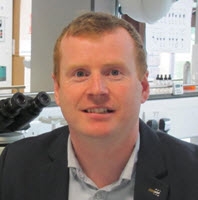
Prof. Sean Fair (picture), has recently coordinated a successful Marie Curie
Doctoral Network (BullNet) which will train 12 PhD students in the area of bull
fertility. The objective of Doctoral
Networks is to implement doctoral programmes by partnerships of organisations
from different sectors across Europe to train highly skilled doctoral
candidates, stimulate their creativity, enhance their innovation capacities and
boost their employability. BullNet, consisting of 8 beneficiaries and 13
associated partner organisations across 7 countries, is a multi-disciplinary
and inter-sectorial research programme designed to unravel the complex
underlying biology of compromised fertility of individual bulls. Cutting-edge
basic, applied and machine-learning approaches will be used to deliver a
robust, flexible semen product from young, appropriately reared and managed,
first-season elite sires that can be used successfully for artificial
insemination (AI) with predictable and consistent fertility, so as to provide
the industry with key tools to meet current emissions and animal welfare
demands. BullNet will also lead to the advancement of knowledge in how bull
management strategies and semen processing affect the functional and molecular
characteristics of sperm, thus opening scientific horizons for new applications
in the area of assisted reproduction. BullNet will expose PhD students to different
sectors and they will acquire a comprehensive set of transferable skills
working in the specific research area relating to their individual research
projects, with an emphasis on the need for technology transfer from academic
institutions to commercial users.
With a 9% success rate in the most recent Doctoral Network call we
congratulate Sean on coordinating this prestigious grant and wish him and his
consortium well.
Recent related publications
The transcriptomic response of bovine uterine tissue is altered in response to sperm from high and low fertility bulls
Comparison of the uterine inflammatory response to frozen-thawed sperm from high and low fertility bulls
3rd Webinar on Trends in Food Science, Technology & Health – Topic 3: Women in Food Science
Date: 10.03.2023 Time: 14:00
– 16:30h
Number of participants: 60 (90% women,
10% men)
Number of countries: 12 (Asia, EU,
Africa, South America)
Delivery mode: 100% online
The 3rd Webinar on Trends in Food Science, Technology, & Health took place on 10th March 2023.
It was organised and hosted by Prof. Daniel Granato and Dr Fabiana Sarda (Department of Biol. Sciences - Faculty of Science & Engineering – University of Limerick) and Prof. Ana Isabel Novo de Barros (University of Tras-os-Montes and Alto Douro– Portugal).
A total of 50 people (90% women, 5% men) from 10 countries in four regions (South America – Brazil; Asia – Iran, Sri Lanka, Turkey; Europe – Estonia, Ireland, Portugal, Spain, Finland, the Netherlands, and Croatia; Africa: South Africa) participated in the discussions about healthy ingredients.
The speakers were from renowned universities, companies and Research Centres in Europe: Dr Talita Comunian, from TEAGASC - Ireland, who gave a lecture on plant-based food in vitro digestions, the definitions, challenges and new perspectives; Dr Ana Barros, from the University of Tras-os-Montes D’ouro-Portugal, who gave a lecture on legume proteins and the challenges in sustainability and health; Dr Reelika Ratsep, from the Estonian University of Life Sciences – Estonia, who gave a speech on food science and sustainable food production.
Last, but not
least, Prof Danijeka Kovacevic, from the University of Zagreb – Croatia, gave a
speech on the design of strawberry-based functional foods by 3D printing.


